
Weekly Practice 12/8/25
After doing this week’s practice, try to share your experience with a friend.
Scripture
Luke 1:26-38 NLT
In the sixth month of Elizabeth’s pregnancy, God sent the angel Gabriel to Nazareth, a village in Galilee, to a virgin named Mary. She was engaged to be married to a man named Joseph, a descendant of King David. Gabriel appeared to her and said, “Greetings, favored woman! The Lord is with you!”
Confused and disturbed, Mary tried to think what the angel could mean. “Don’t be afraid, Mary,” the angel told her, “for you have found favor with God! You will conceive and give birth to a son, and you will name him Jesus. He will be very great and will be called the Son of the Most High. The Lord God will give him the throne of his ancestor David. And he will reign over Israel forever; his Kingdom will never end!”
Mary asked the angel, “But how can this happen? I am a virgin.”
The angel replied, “The Holy Spirit will come upon you, and the power of the Most High will overshadow you. So the baby to be born will be holy, and he will be called the Son of God. What’s more, your relative Elizabeth has become pregnant in her old age! People used to say she was barren, but she has conceived a son and is now in her sixth month. For the word of God will never fail.”
Mary responded, “I am the Lord’s servant. May everything you have said about me come true.” And then the angel left her.
Practices
Lectio Divina & Visio Divina
At Trellis, we practice lectio divina, or “divine reading” on a regular basis. This is where we read and re-read a portion of scripture slowly and prayerfully, leaving space to quietly listen and respond to the Holy Spirit. Here’s a framework if you’ve never done this before:
Read the text. Notice, what word or phrase stands out?
Read the text again. Notice, what do you feel? What part of your life comes to mind?
Read the text a third time. Notice, what is God saying to or inviting you to do?
Next, offer anything God has shown you back to him in prayer.
End with a minute of silence, resting in God’s love.
Visio divina, or “divine seeing” is similar, but instead of meditating on a piece of scripture, we prayerfully contemplate an image or scene. You could even do this in nature, watching the sun rise or a river’s current. Here’s a framework:
Gaze at the entire image or scene. Notice, what details draw your attention?
Meditate on these details, and listen for God to speak to you. Are any emotions or memories stirred up? Do you sense a connection with your own life? Do you sense an invitation? Try to just listen.
Now that you’ve let God speak to you, it’s your turn to respond. Talk about what you’ve noticed, felt, and thought with Him. Be honest. Ask questions if you need to. Then, offer what he has shown you back to him in prayer.
End with a minute of silence, resting in God’s love.
This week, try lectio divina with Luke 1:26-38, or visio divina with the image below. It’s titled “The Annunciation.” Even better, try out both!
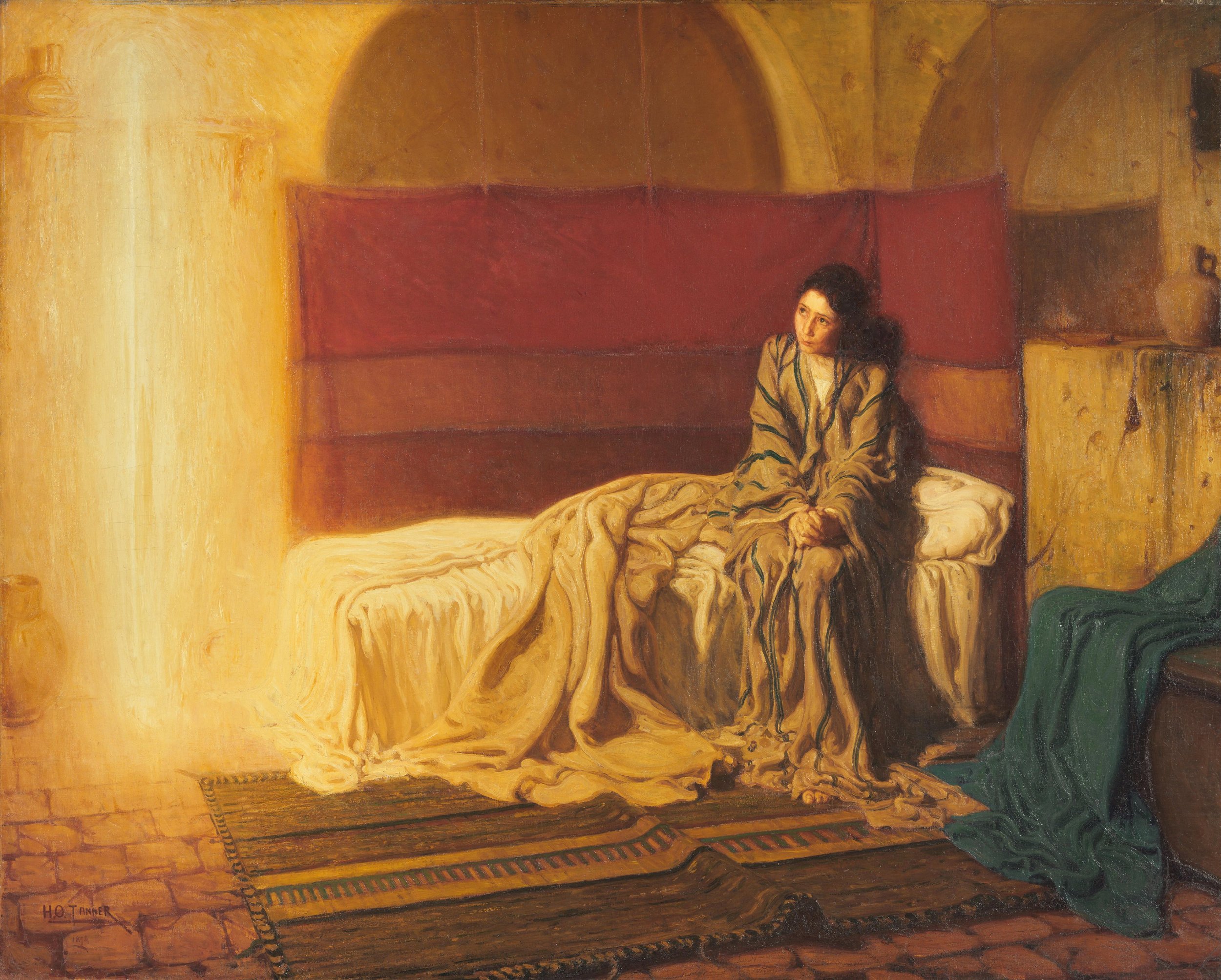
Henry Ossawa Tanner, The Annunciation, 1898
Art & poetry
Malcolm Guite is a poet and a priest. His blog merges art and theology in a down-to-earth, accessible way. Here’s a creative reflection on an Advent poem by Lucy Shaw called “Kenosis.”
More good Christmas music
Another album from another artist from another time (1986) that may surprise you. Driscoll’s version of “O Holy Night” is fire.🔥🔥🔥
